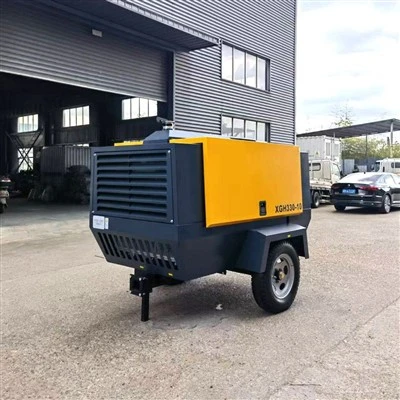
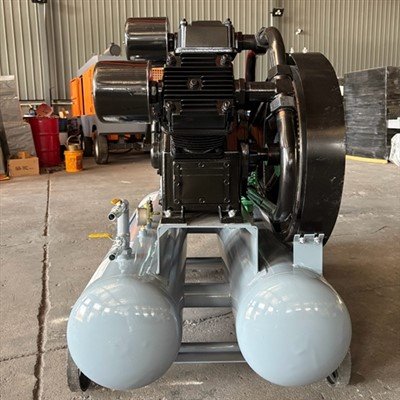
As the "breathing engine" of modern industry, air compressors convert mechanical energy into gas pressure energy by compressing gas, providing a clean and controllable power source for manufacturing, energy, and medical fields. Their performance directly impacts production continuity and equipment efficiency.
From a technical perspective, mainstream models fall into two categories: positive displacement and dynamic. Positive displacement compressors (such as piston and screw compressors) increase air pressure by reducing the chamber volume. For example, screw compressors, with their compact structure and stable operation, have captured over 70% of the industrial market share. Dynamic compressors (such as centrifugal compressors) utilize high-speed impellers to accelerate gas, suitable for high-flow, high-pressure applications, and commonly found in large air separation units and power generation systems. In recent years, the integration of permanent magnet variable frequency technology and intelligent control systems has reduced equipment energy consumption by more than 30% compared to traditional fixed-frequency models. Some high-end products have achieved precise control with a constant pressure supply error of ≤0.01MPa.
On the application side, air compressors are a key support for intelligent manufacturing: automotive welding lines rely on their stable air supply to complete high-precision welding, the electronics industry uses oil-free models to ensure a clean environment, and the food and pharmaceutical fields use aseptic compression technology to meet stringent hygiene standards. Meanwhile, with the advancement of "dual-carbon" goals, low-noise design (≤75dB for some models) and waste heat recovery systems (which can recover more than 85% of the compression heat for heating or process heating) have become key areas for industry upgrades, driving the transformation of equipment from "power output" to "green hub."
Currently, air compressors are evolving towards higher efficiency, intelligence, and lower carbon emissions. Technological breakthroughs not only improve the energy efficiency of individual devices but also provide fundamental support for energy conservation and consumption reduction in industrial systems, continuously releasing the industrial value of "small equipment driving big changes."