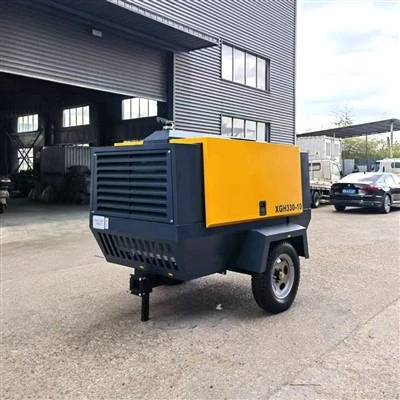
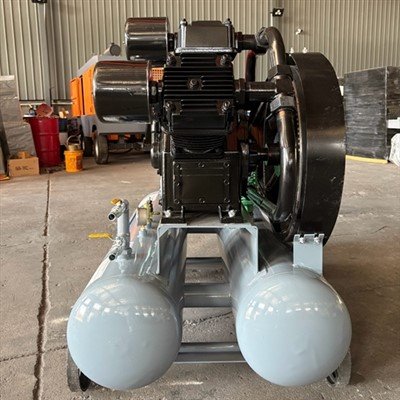
As the core equipment for rock breaking and drilling, the performance of a rock drill directly determines the efficiency, quality, and reliability of engineering operations. Through long-term technological evolution and engineering practice, rock drills have developed a multi-dimensional performance system encompassing power output, rock breaking efficiency, working condition adaptability, operational accuracy, and reliability and durability, providing solid technical support for fields such as mining, tunneling, water conservancy and hydropower, and geological exploration.
Power performance is the foundation of a rock drill's operational capabilities. Different power types of rock drills each have their own advantages in energy conversion efficiency and output characteristics: Pneumatic rock drills use compressed air as the medium, providing direct energy transfer and rapid start-up response, making them suitable for intermittent operation and small-to-medium diameter drilling; Hydraulic rock drills are driven by high-pressure hydraulic fluid, offering high power density and outputting greater impact energy and stable torque, with impact frequencies typically between 30 and 70 Hz, capable of efficient drilling into deep holes, large diameters, and hard rock; Electric rock drills convert electrical energy into mechanical energy, offering high energy utilization, clean and low-noise operation, and are suitable for conditions with a stable power supply; Internal combustion rock drills require no external power source, are self-powered, highly mobile, and can be quickly deployed in environments without electricity or air. The quality of the power system directly affects the equipment's continuous operating capability and energy consumption level under complex working conditions.
Rock breaking efficiency is reflected in the combined performance of drilling speed and hole quality. Percussion rock drills utilize high-frequency impact force (e.g., 20–50 Hz for pneumatic types, and over 70 Hz for hydraulic types) to quickly wed into hard rock masses, enabling continuous drilling in conjunction with rotary dust removal. Rotary models primarily employ cutting action, providing stable drilling with minimal vibration in soft rock. The combined percussion-rotary type integrates the advantages of both, maintaining high drilling speeds while reducing borehole irregularities and improving borehole accuracy in medium-hard to hard rock formations. Modern models optimize the matching of impact energy and rotational speed, dynamically adjusting parameters based on rock hardness and toughness to maximize rock-breaking efficiency.
Operating condition adaptability reflects the equipment's capacity to adapt to different construction environments and rock conditions. Rock drills are categorized by support method into handheld, outrigger, overhead, and rail-mounted types, covering a full range of needs from short, shallow holes in confined spaces to deep holes in large engineering projects. Their versatility in power sources allows them to adapt to conditions with air, electricity, hydraulic stations, or no external power source. The integration of wet drilling and dust removal devices ensures they meet environmental and health requirements in terms of dust control and noise suppression. Buffer and vibration damping structures reduce dynamic load damage to the machine body and drill bits, improving stability under conditions of intense vibration.
Operating accuracy is crucial for the precision of hole position, diameter, and depth. The application of hydraulic and electronic control systems allows for precise adjustment of parameters such as impact energy, rotational speed, and feed pressure. Combined with rigid positioning using rail-mounted or trolley-type systems, hole position deviations can be kept within a small range, preventing reduced blasting effectiveness or support failure due to misalignment. In geological exploration, high-precision drilling further ensures the integrity of core samples and the accuracy of data acquisition.
Reliable durability is essential for the long-term stable operation of the equipment. Modular design facilitates the maintenance and replacement of key components (such as impact pistons, rotary motors, and clamping mechanisms); high-quality materials and surface treatment processes enhance resistance to wear and fatigue; and a lubrication and dustproof system reduces impurity intrusion and extends the life of moving parts. Statistics show that a properly maintained rock drill can meet the continuous requirements of high-intensity operations in hard rock conditions.
In summary, rock drills, with their powerful performance, high rock-breaking efficiency, wide adaptability to various working conditions, precise operating accuracy, and reliable durability, possess irreplaceable technological advantages in the field of geotechnical engineering. Continuous performance optimization will further promote the development of engineering operations towards higher efficiency, intelligence, and greener practices.