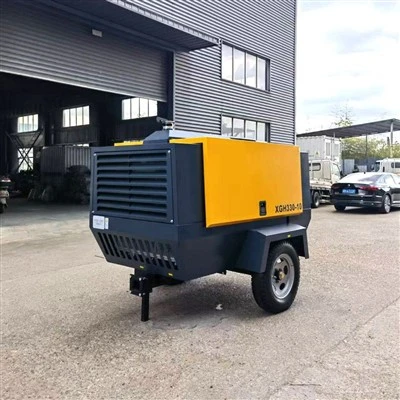
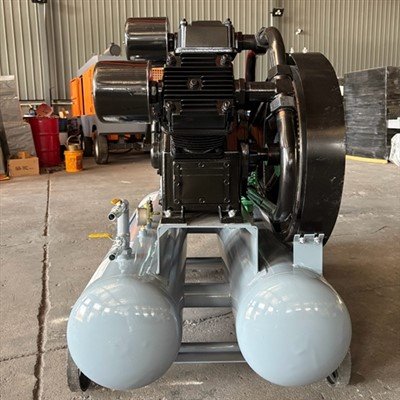
As a key engineering equipment for achieving efficient rock breaking and hole formation, the functional basis of rock drills stems from the organic combination of energy conversion, rock-breaking mechanisms, and system synergy. All types of rock drills are based on the premise of converting external energy into controllable mechanical energy. They overcome the strength and toughness of rock through specific rock-breaking methods and, with the cooperation of multiple systems, complete a series of processes such as drilling, dust removal, and equipment protection. This provides a reliable means of rock processing for engineering fields such as mining, tunneling, water conservancy and hydropower, and geological exploration.
At the energy conversion level, rock drills, depending on the power source used, convert compressed air, hydraulic oil, electrical energy, or internal combustion engine power into the reciprocating mechanical energy of a piston or impactor. Pneumatic rock drills utilize an air distribution system to alternately supply compressed air to the front and rear chambers of the cylinder, driving the piston to move at high speed and impact the drill bit, generating impact energy. Hydraulic rock drills use a hydraulic pump to output high-pressure oil, which drives the impact piston via a control valve and accumulator, featuring high power density and adjustable impact frequency and output force. Electric rock drills output mechanical impact through an electric motor via a crankshaft connecting rod or eccentric wheel mechanism. Internal combustion rock drills directly drive the machine body to complete the impact action using the power generated by the combustion of an internal combustion engine. Regardless of the energy type, their common goal is to stably and efficiently convert raw energy into mechanical energy that can act on rock.
The rock-breaking mechanism is the core element in realizing these functions. Impact drills utilize the instantaneous high-energy impact of a piston on the drill bit, causing the drill teeth to wed into the rock and fracturing the rock mass through stress concentration. This type is suitable for hard and abrasive rock formations. Rotary drills use continuous rotation of the drill bit to cut and, combined with axial thrust, remove rock cuttings. This type is suitable for soft rock and coal seams with low compressive strength. The impact-rotary hybrid type combines the advantages of impact crushing and rotary cutting, balancing drilling speed and hole regularity in medium-hard to hard rock formations. The selection and matching of different mechanisms allow rock drills to achieve optimal rock-breaking effects for different rock types.
System coordination is the guarantee of stable operation. The rock drill consists of a power unit, impact mechanism, rotation mechanism, propulsion and clamping system, flushing and dust removal system, and buffer, vibration reduction, lubrication, and dust prevention structures, forming a complete closed loop. The power unit provides energy; the impact mechanism breaks the rock; the rotating mechanism drives the drill bit to rotate for continuous cutting and slag removal; the propulsion and clamping system provides controllable axial thrust and ensures reliable drill bit connection; the flushing and dust removal system suppresses dust and removes rock cuttings through water or air injection, maintaining working visibility and cooling conditions; the buffer and vibration damping device absorbs rebound impacts, reducing dynamic load damage to the machine body; and the lubrication and dustproof structure reduces wear and extends service life. Modern rock drills can also integrate hydraulic or electronic control systems to adjust parameters such as impact energy, rotational speed, and propulsion pressure in real time, enabling the equipment to adapt to different working conditions and rock type changes.
Therefore, the functional foundation of a rock drill lies in the efficient conversion of energy forms, the scientific design of the rock-breaking mechanism, and the close coordination of multiple systems. These three aspects complement each other, ensuring stable, accurate, and efficient drilling operations in complex construction environments, making it an indispensable basic equipment for geotechnical engineering and resource development.