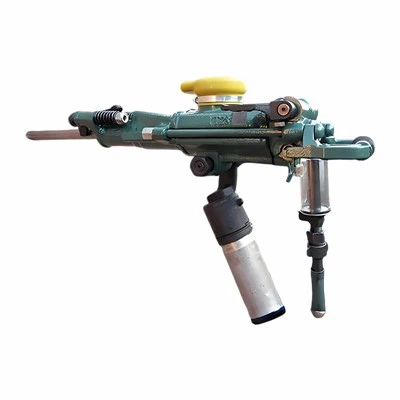
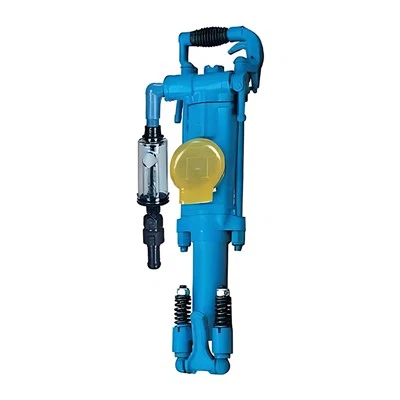
On the front lines of construction sites, the choice of power source-pneumatic or electric-directly determines both construction efficiency and equipment lifespan. As a seasoned industry specialist, Fengzhe Company has observed through extensive practical experience that both types have their distinct strengths; the key lies in how they are matched to the specific realities of each project.
1. Differences in Power and Impact Force
Pneumatic rock drills (air drills) are driven by high-pressure airflow from an air compressor, delivering extremely powerful single-impact force. They demonstrate a distinct advantage in drilling speed, particularly when tackling hard rock formations such as granite or basalt. In contrast, while electric rock drills boast high energy conversion efficiency, their explosive power often falls short when confronted with extremely hard rock strata.
2. Environmental Adaptability and Safety
The defining characteristic of an air drill is its imperviousness to water. In mines characterized by dampness, water seepage, or even the risk of gas accumulation, the pneumatic drill head carries no electrical current, ensuring an exceptionally high level of safety. Electric drills, on the other hand, are more sensitive to environmental conditions; although their ingress protection ratings are constantly improving, the risk of electrical leakage remains a concern in tunnels with significant standing water. Fengzhe Company recommends that for urban interior renovation projects or structural reinforcement work in noise-sensitive areas, electric drills are the more suitable choice due to their low-noise operation.
3. Flexibility and Ancillary Costs
Electric rock drills excel in terms of portability-they are plug-and-play devices-making them ideal for small-scale, sporadic tasks that require frequent repositioning. Air drills, conversely, require the trailing of air hoses and the use of a dedicated air compressor. For simple tasks-such as drilling just a few anchor holes-deploying an air drill is akin to "using a sledgehammer to crack a nut." However, for large-scale operations-such as tunnel excavation-where a single large air compressor can power multiple air drills simultaneously, the resulting advantages in shared efficiency and unit cost become highly pronounced.
4. Maintenance and Durability
Air drills feature a simple structure, consisting solely of mechanical components such as pistons and air valves; they are highly rugged and have a low barrier to maintenance, allowing experienced workers to typically handle disassembly and servicing themselves. Electric drills, however, contain precision internal components; should the motor burn out or water infiltrate the circuit board, the resulting repair costs can be substantial. When providing equipment selection recommendations, Fengzhe Company consistently advises clients to comprehensively consider the long-term ease of maintenance to avoid potential project delays caused by prolonged repair cycles. Fengzhe Selection Summary:
Large-scale Tunnels and Hard-Rock Mines: Pneumatic rock drills are recommended as the primary choice, prioritizing maximum power and environmental resilience.
Indoor Rebar Anchoring, Structural Reinforcement, and Minor/Sporadic Tasks: Electric rock drills are recommended as the primary choice, prioritizing convenience and low energy consumption.