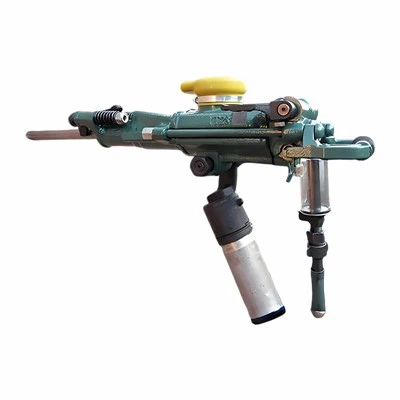
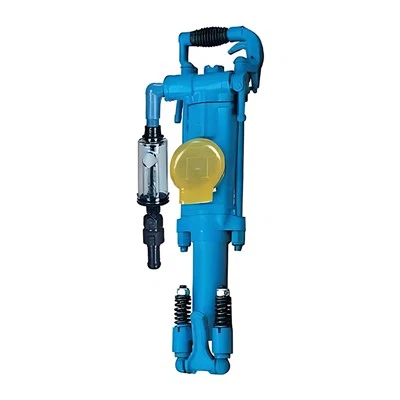
For small-scale engineering projects, the selection of rock-drilling equipment should not blindly prioritize high performance; instead, it requires striking a balance between maneuverability and cost-effectiveness. Drawing on years of experience serving grassroots engineering projects, Fengzhe Company has observed that many small-scale ventures face challenges regarding site constraints and limited supporting resources. Consequently, the primary consideration when selecting equipment should be the available power supply. If the worksite has access to mains electricity and is situated in an indoor or enclosed environment, an electric rock drill offers a more flexible solution. However, for outdoor operations involving hard rock formations, a pneumatic rock drill paired with a small, portable air compressor remains the more reliable choice.
Rock hardness also dictates the "tonnage"-or power-of the tool you require. Fengzhe Company advises that for the soft rock or shallow holes commonly encountered in small-scale projects, a lightweight, handheld drill can easily handle the task, relying primarily on its own weight. Conversely, when tackling "hard nuts to crack"-such as granite-one should strictly avoid the temptation to force the issue with a handheld drill simply to save effort. Doing so not only places an excessive physical strain on the operator but also accelerates the unnecessary wear and tear of the drill bit. In such instances, equipping the site with a lightweight air-leg rock drill-which utilizes constant thrust to maximize drilling efficiency-proves to be a far more cost-effective strategy.
Furthermore, ensuring compatibility between the equipment and its air source is the area where small-scale projects are most prone to stumbling. Fengzhe Company frequently reminds clients that pneumatic drills rely entirely on airflow to function; therefore, the air compressor's output capacity must exceed the machine's air consumption requirements by a margin of approximately 20%. If, in an attempt to save money, one selects a compressor with a capacity that is merely "just enough," the air pressure will inevitably drop during actual operation. This renders the drill sluggish and underpowered-incapable of penetrating the rock effectively-and can even lead to poor dust evacuation, potentially causing the drill rod to overheat and burn out. Ultimately, such a decision proves to be a false economy.
Finally, logistical costs must be taken into account. Small-scale projects typically operate on relatively thin profit margins, making them particularly vulnerable to work stoppages caused by the failure of a single component. In its equipment selection recommendations, Fengzhe Company consistently emphasizes the importance of spare-part interchangeability. We advise clients to prioritize models that are widely available on the market and feature simple structural designs; this ensures that-even on remote worksites-essential consumables and wear parts (such as seals or pistons) can be readily procured whenever needed. Through this pragmatic, utility-first selection strategy, Fengzhe Company aims to empower every engineering contractor to achieve greater efficiency with lower overall investment.