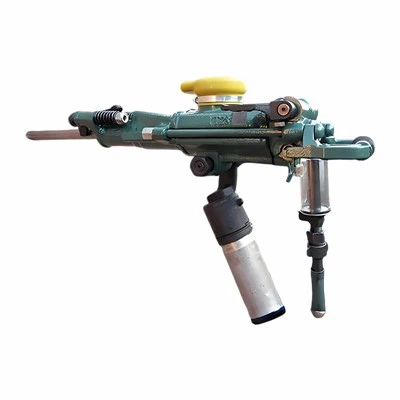
How to Reduce the Dust Emission of a Dry Rock Drill?
As a rock drill supplier, I understand the importance of addressing dust emission issues associated with dry rock drills. Dust generated during rock drilling operations not only poses health risks to workers but also has environmental implications. In this blog, I will share some effective strategies to reduce the dust emission of a dry rock drill.
Understanding the Dust Problem
Before delving into the solutions, it's crucial to understand the sources and characteristics of dust generated by dry rock drills. When a dry rock drill operates, it breaks the rock into small particles, which become airborne as dust. The dust can contain various harmful substances such as silica, which can cause serious respiratory diseases like silicosis if inhaled over a long period.
1. Use of Dust Collection Systems
One of the most effective ways to reduce dust emission is by installing a dust collection system. These systems work by capturing the dust at the source before it spreads into the surrounding environment. There are different types of dust collection systems available, including cyclone separators, bag filters, and electrostatic precipitators.
Cyclone separators are simple and cost - effective devices that use centrifugal force to separate the dust from the air. The dust - laden air enters the cyclone, and the centrifugal force causes the dust particles to move towards the outer wall of the cyclone and fall into a collection hopper.
Bag filters are another popular option. They consist of a series of fabric bags that trap the dust as the air passes through them. The dust accumulates on the surface of the bags, and periodically, the bags are cleaned to remove the collected dust.
Electrostatic precipitators use an electrostatic charge to attract and collect the dust particles. They are highly efficient but can be more expensive to install and maintain compared to cyclone separators and bag filters.
2. Water Spraying
Water spraying is a simple yet effective method to suppress dust. By spraying water at the drilling site, the water droplets bind with the dust particles, making them heavier and causing them to fall to the ground. This reduces the amount of airborne dust.
There are different ways to implement water spraying. One approach is to use a water - misting system, which sprays a fine mist of water around the drill bit. Another option is to use a water - curtain system, which creates a wall of water around the drilling area to prevent the dust from spreading.
However, it's important to note that excessive water use can cause other problems such as mud formation, which can affect the drilling efficiency. Therefore, the amount of water sprayed needs to be carefully controlled.
3. Proper Drill Bit Selection
The type of drill bit used can also have an impact on dust emission. A dull or worn - out drill bit can generate more dust compared to a sharp one. When a drill bit is sharp, it cuts through the rock more cleanly, producing fewer dust particles.
As a rock drill supplier, we offer a variety of high - quality drill bits that are designed to minimize dust generation. For example, our Rail Type Rock Drilling Machine is equipped with advanced drill bits that are engineered for efficient and low - dust drilling.
4. Ventilation Systems
Proper ventilation is essential to remove the dust from the work area. Ventilation systems can be used to draw the dust - laden air out of the drilling site and replace it with fresh air.
There are two main types of ventilation systems: natural ventilation and mechanical ventilation. Natural ventilation relies on the movement of air through openings in the building or work area. Mechanical ventilation, on the other hand, uses fans and ducts to force the air circulation.
In a confined space, mechanical ventilation is usually more effective in removing the dust. It can be designed to direct the dust - laden air to a dust collection system for further treatment.
5. Operator Training
Operator training is often overlooked but is a crucial factor in reducing dust emission. A well - trained operator can operate the rock drill more efficiently, which can lead to less dust generation.
Operators should be trained on the proper use of the rock drill, including how to adjust the drilling parameters such as speed and pressure. They should also be educated on the importance of dust control and the proper use of dust collection and suppression equipment.
6. Regular Maintenance
Regular maintenance of the rock drill is essential to ensure its optimal performance and reduce dust emission. A well - maintained drill is less likely to generate excessive dust.
This includes checking and replacing worn - out parts such as drill bits, seals, and bearings. It also involves cleaning the drill regularly to remove any dust or debris that may have accumulated inside the machine.
7. Use of Low - Dust Rock Drills
As a rock drill supplier, we are constantly researching and developing new products to reduce dust emission. Our YGZ90 Rock Drill and YSP45 Rock Drill are designed with advanced technologies to minimize dust generation during the drilling process.


These drills are equipped with features such as improved air - flow design and efficient dust - collection mechanisms. They are also made from high - quality materials that ensure long - term durability and reliable performance.
Conclusion
Reducing the dust emission of a dry rock drill is a multi - faceted challenge that requires a combination of strategies. By using dust collection systems, water spraying, proper drill bit selection, ventilation systems, operator training, regular maintenance, and low - dust rock drills, we can significantly reduce the amount of dust generated during rock drilling operations.
If you are interested in our rock drill products or need more information on dust reduction solutions, please feel free to contact us for procurement and further discussions. We are committed to providing high - quality rock drills and effective dust control solutions to meet your needs.
References
- Occupational Safety and Health Administration (OSHA). (2016). Respirable Crystalline Silica Standard.
- National Institute for Occupational Safety and Health (NIOSH). (2018). Control of Respirable Silica Dust in Mining.
- American Conference of Governmental Industrial Hygienists (ACGIH). (2020). Threshold Limit Values for Chemical Substances and Physical Agents.